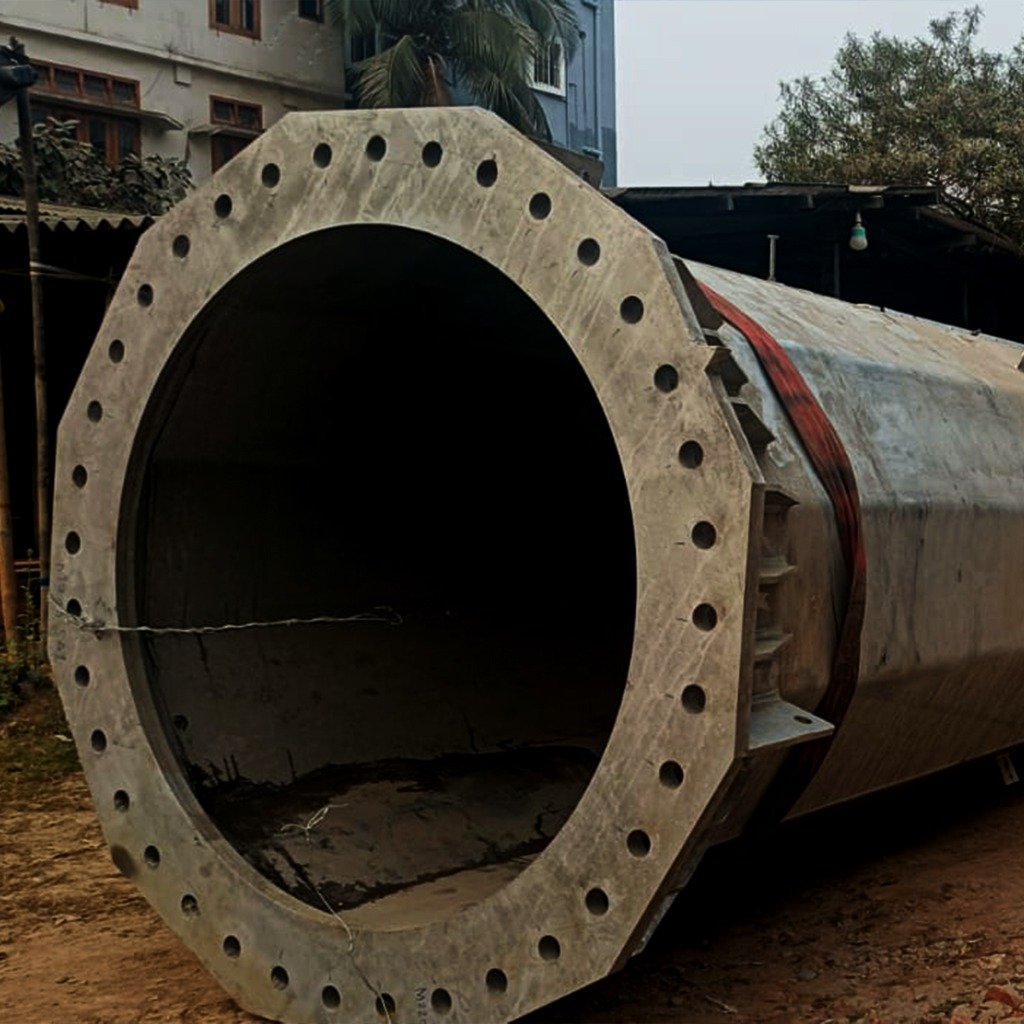
Transmission towers are fundamental components of electrical infrastructure, supporting conductors that carry power across long distances. At Krishna Urja, we provide specialized services for the erection of monopole structures and lattice transmission towers, ensuring structural stability, precision alignment, and long-term operational reliability.
Our experience spans a wide range of transmission and distribution projects where tower structures must be installed efficiently while meeting strict engineering and safety requirements.
Power transmission infrastructure has evolved significantly over the years, with utilities adopting both conventional lattice towers and modern monopole structures depending on project requirements.
Lattice towers have traditionally been used for high-voltage transmission lines due to their strength, durability, and ability to support long spans. These structures consist of interconnected steel members assembled to create rigid frameworks capable of withstanding wind loads, conductor tension, and environmental stresses.
Monopoles, on the other hand, offer a compact and aesthetically suitable alternative, particularly in urban or space-constrained areas. These single-pole steel structures require smaller footprints and can often be installed faster than conventional lattice towers.
Krishna Urja has developed the technical capability and operational expertise to install both types of structures across a variety of terrain conditions.
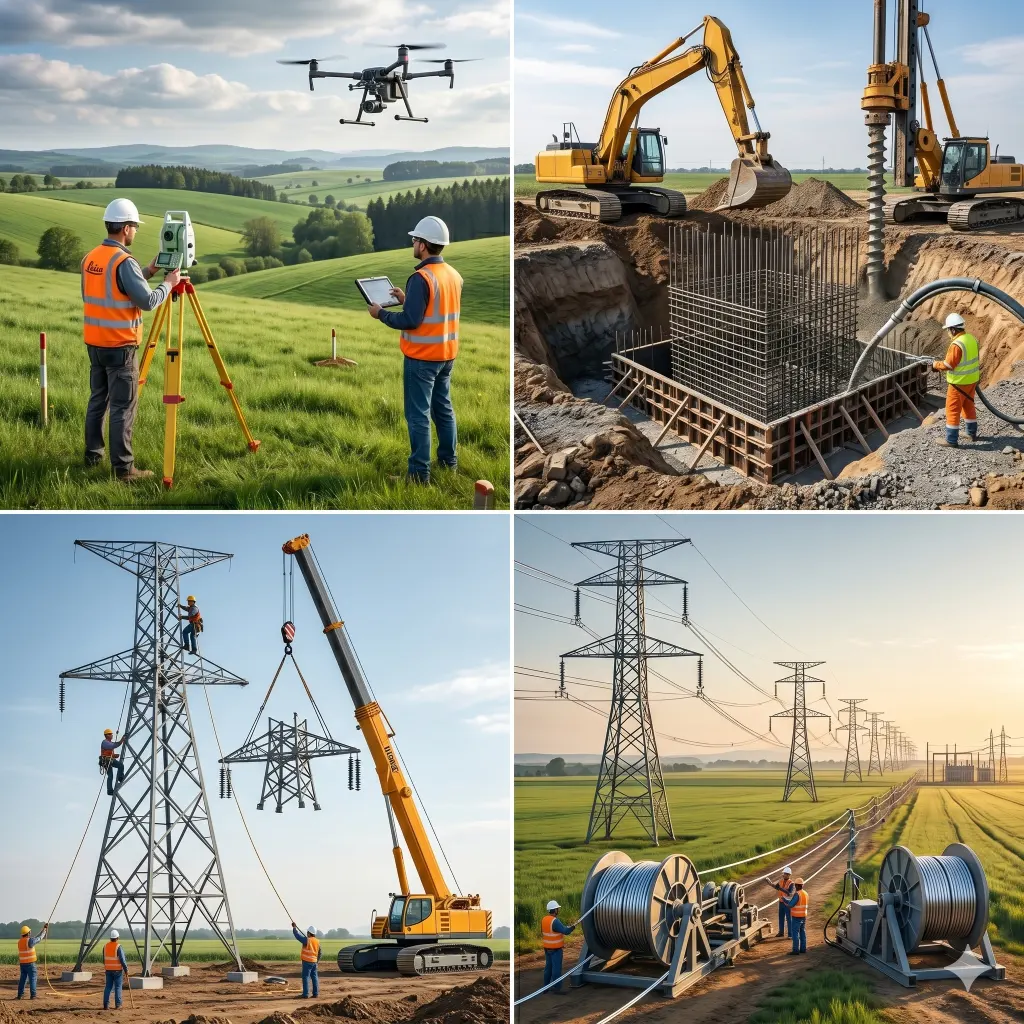
Tower erection demands careful coordination between engineering plans and on-site execution. Even minor deviations during assembly can affect structural performance or conductor alignment.
Our teams follow systematic erection procedures that ensure each tower is assembled accurately and safely. Structural components are carefully inspected before assembly to verify compliance with project specifications.
For lattice towers, the process typically begins with sorting and assembling tower members at ground level. Sections are then lifted and installed sequentially using cranes, derricks, or specialized lifting equipment. Each stage is checked for alignment and structural integrity before proceeding further.
Monopole erection involves lifting large steel poles and positioning them onto prepared foundations with precise vertical alignment. Advanced lifting equipment and rigging techniques ensure safe installation even for tall or heavy structures.
Transmission projects frequently involve challenging environments where access and logistics require careful planning. Krishna Urja’s field teams are experienced in managing tower erection in diverse conditions including rural landscapes, mountainous terrain, river crossings, and densely populated urban areas.
We plan site access, equipment movement, and material handling in advance to ensure efficient operations without compromising safety or project timelines.
In areas with limited access, alternative erection methods such as sectional lifting or manual assembly techniques may be used to overcome logistical constraints.
Ensuring the structural stability of transmission towers requires strict adherence to engineering standards and installation procedures. Krishna Urja follows rigorous quality control measures throughout the erection process.
Bolt tightening, structural alignment checks, and component verification are conducted during each stage of assembly. These inspections ensure that the installed structure can safely withstand operational loads and environmental forces over its design lifespan.
Detailed documentation and quality records are maintained to support project transparency and regulatory compliance.
Working with heavy steel structures at height presents significant safety challenges. Krishna Urja prioritizes safety through comprehensive planning, trained personnel, and strict adherence to safety guidelines.
All lifting operations are carried out using certified equipment and experienced rigging teams. Workers are trained in safe climbing techniques, fall protection systems, and equipment handling procedures.
Site supervisors continuously monitor operations to ensure that safety standards are maintained throughout the erection process.
Timely completion is a critical factor in transmission infrastructure projects. Delays in tower erection can impact multiple downstream activities, including conductor stringing and commissioning.
Krishna Urja’s project management teams coordinate closely with clients, suppliers, and field crews to ensure smooth execution and adherence to project schedules.
Through efficient planning, experienced workforce deployment, and the use of modern equipment, we consistently deliver tower erection works within committed timelines.
Transmission towers are designed to operate reliably for decades under varying environmental conditions. Proper installation plays a vital role in ensuring this long-term performance.
Krishna Urja combines engineering expertise, practical field experience, and disciplined project management to deliver tower erection services that support reliable power infrastructure.
Our commitment to quality construction and safe operations ensures that every structure we install contributes to the stability and efficiency of the power transmission network.
Urban corridors, highways, metro/railway crossings, and narrow RoW zones.
Yes. Execution includes safety planning and coordination with local authorities.
© Copywright 2026. All Rights Reserved.